Ceviche, Two Ways: Lingcod and Scallops for a Vancouver Summer
Two seafood-first recipes for hot August evenings: bright lingcod ceviche and chilled citrus scallops.
On an August evening in Vancouver, dinner should feel almost as cool as the drink beside it. Ceviche answers with cold seafood, sharp citrus, crisp vegetables, fresh chile and the snap of a tostada. It has enough going on to feel like dinner without asking you to stand over a hot stove.
Lingcod and scallops take that idea in different directions. Firm, clean-tasting lingcod can carry lime, red onion, cucumber and avocado. Sweeter, more delicate scallops need a lighter dressing of pink grapefruit, lime, cucumber and summer corn. In both cases, the seafood should still be the first thing you taste.
Ceviche is unforgiving in a useful way. There is no rich sauce or long cooking process to blur the quality of the seafood, and there are only a handful of ingredients between the fish and the first bite. That simplicity is what makes the dish so refreshing, but it is also why restraint matters.
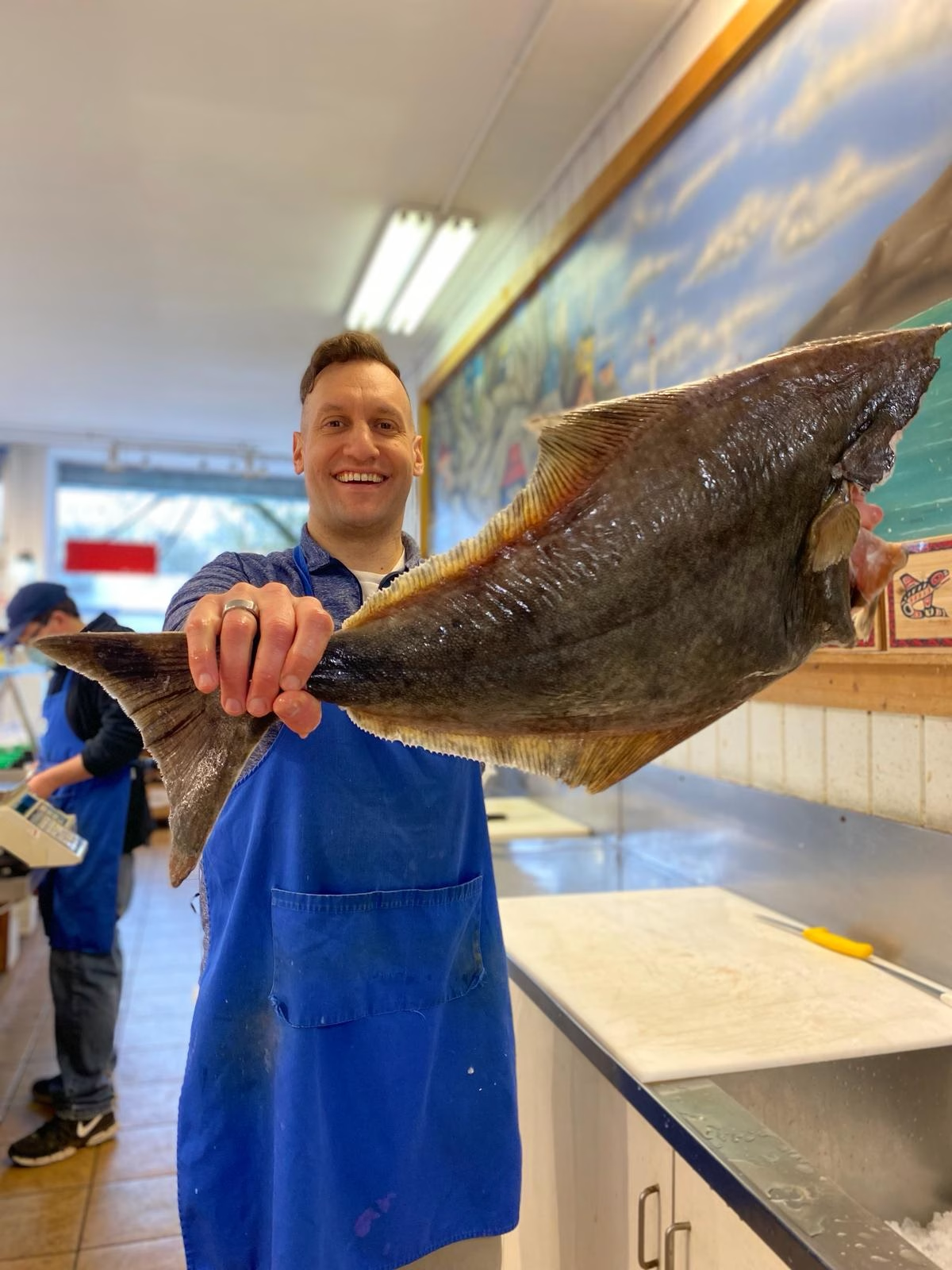
When someone comes into 7 Seas Fish Market for seafood, knowing what they plan to make is often more useful than simply knowing how many pounds they want. With ceviche, that matters even more. If the fish will not be conventionally cooked, say so at the counter; the preparation affects the conversation about selection, portioning and handling.
What Makes a Good Ceviche?
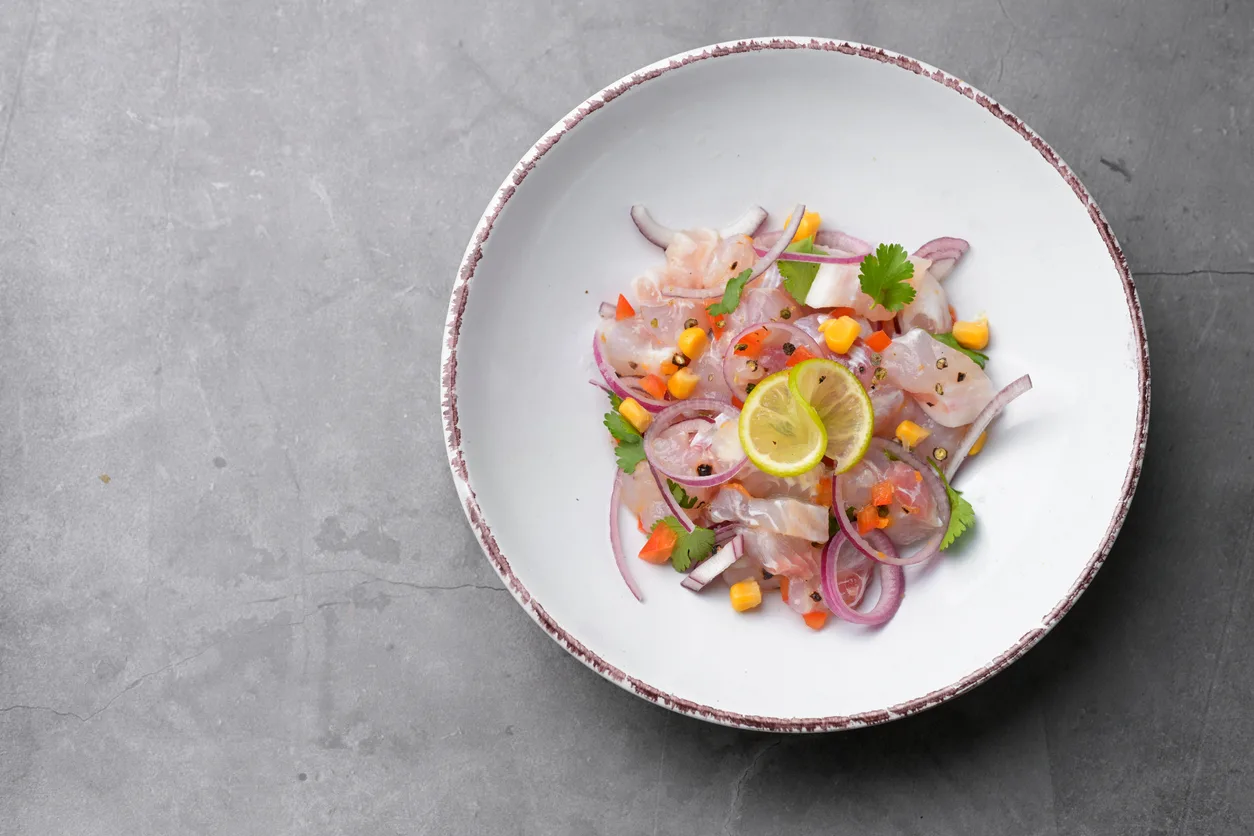
Good ceviche is mostly a question of balance. Citrus should brighten the seafood rather than bury it, salt should bring the flavour forward, and chile should add heat without taking over. Cucumber, onion, corn or a tostada brings the crispness that keeps a cold bowl lively; avocado can soften the sharper edges.
Time matters as much as seasoning. Acid begins firming fish quite quickly, so a short cure can leave small pieces tender at the centre while a long soak can make them increasingly firm and chalky. In the recipes below, the lingcod gets a brief lime cure before most of the juice is drained. The scallops are fully cooked, chilled and dressed with citrus just before serving.
Choosing Between Lingcod and Scallops
The two versions share citrus, cucumber and chile, but they suit different meals.
Lingcod is the relaxed choice: firm enough to spoon onto a tostada, bright with lime and substantial enough to carry a light dinner from a bowl in the middle of the table. Scallops are sweeter and softer. Pink grapefruit gives them gentler acidity, while corn and cucumber keep the dish fresh and summery.
Choose lingcod when you want something crisp, lime-forward and casual. Choose the scallops when you want a smaller, lighter first course. The ingredients around each one should respond to the seafood rather than force both into the same recipe.
West Coast Lingcod Ceviche with Lime, Cucumber, Chile and Avocado
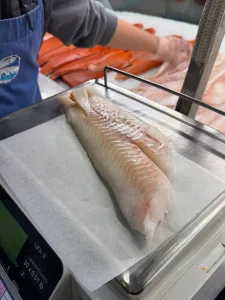
Lingcod does not need much around it. Its firm flesh can stand up to lime and chile, while cucumber, red onion and avocado give the bowl contrast without covering the fish.
There is no tomato, heavy sauce or long soak in citrus here. The lingcod gets enough lime to change its texture and brighten its flavour, then the excess juice is drained before the rest of the ingredients go in.
Serves 4 as an appetizer or 2 as a light meal.
Ingredients
- 450 g (1 lb) boneless, skinless lingcod selected with your fishmonger for a ceviche preparation
- About ¾ cup freshly squeezed lime juice
- 1 to 2 tablespoons freshly squeezed orange juice
- ¼ small red onion, sliced very thinly
- ½ English cucumber, cut into small dice
- 1 serrano chile or jalapeño, thinly sliced or finely minced
- ⅓ cup loosely packed cilantro leaves, roughly torn
- ½ large ripe avocado, cut into small cubes
- Fine sea salt, to taste
- Crisp tostadas or sturdy tortilla chips, for serving
Before you begin: this recipe uses fish that is not conventionally cooked. For people at higher risk of foodborne illness, Health Canada advises choosing seafood cooked to safe internal temperatures rather than raw seafood.
Method
Keep the lingcod cold while you work and cut it into even pieces about 1.25 cm, or ½ inch. A reasonably consistent size helps the pieces respond to the citrus at roughly the same rate.
Place the fish in a chilled glass or stainless-steel bowl and add enough lime juice to coat it generously. Toss gently, cover and return the bowl to the refrigerator.
Begin checking the texture after about 10 minutes. For pieces this size, 10 to 20 minutes is a useful starting range if you want a firmer exterior and tender centre, but the fish in front of you should decide when you stop. The lime time is about texture, not food safety.
Once the texture is where you want it, drain away most of the lime juice without pressing the fish dry. A little citrus clinging to the pieces is enough; removing the excess keeps the ceviche from getting sharper while it waits for the table.
Fold in the cucumber, red onion and chile. Keep the cucumber small enough to show up in most bites and the onion thin enough to give crunch without taking over.
Taste before adding more citrus. If the lime feels especially sharp, add a tablespoon of fresh orange juice. It should not make the ceviche sweet; its job is simply to round the acidity.
Season with salt, add the cilantro and taste again. Cold food and strong acidity can mute seasoning, so add salt gradually until the lingcod tastes clear and distinct. Fold in the avocado just before serving.
Serve immediately in a chilled bowl with tostadas or sturdy tortilla chips. The combination should move from firm fish and lime to cool cucumber, chile and soft avocado, with the crisp corn shell underneath.
The tostada is more than a serving vehicle. Ceviche contains plenty of tender and wet textures, so the dry, salty crunch makes the fish, cucumber and avocado feel more distinct. For a casual dinner, put the chilled bowl in the middle of the table with a stack of tostadas and let everyone build their own bites.
Tomato stays out of this version. It works beautifully in many ceviches, but leaving it out keeps the lingcod, cucumber and lime particularly clear.
Fishmonger Note
Tell us you are making ceviche, how many people are coming and whether it is the first course or the meal. That gives us a much better starting point for choosing and portioning the seafood than simply asking for a pound of fish. It also lets us talk about the cut and preparation before you get home and start squeezing limes.
A Few Technique Notes
Once the seafood is chosen, a few small decisions matter more than exact measurements. Smaller pieces change more quickly in citrus, one lime can be much sharper than the next, and a flat ceviche may need salt rather than another squeeze of juice. Taste as you go and stop when the seafood is where you want it.
Cut size is worth watching because it changes the pace of the cure. A small cube of fish firms more quickly than a large one, which is why the lingcod is cut into fairly even ½-inch pieces. The same principle applies to seasoning: if the bowl tastes flat, check the salt before reaching automatically for another lime. More acid is not always the answer.
Keep the seafood refrigerated while you prepare the other ingredients, and chill the serving bowl if you have room. Properly cold ceviche tastes cleaner: cucumber seems crisper, citrus brighter and chile fresher. Beyond that, resist crowding the bowl. Seafood, citrus, salt, chile and one or two contrasting textures are usually enough.
Chilled Citrus Scallops with Pink Grapefruit, Cucumber and Summer Corn
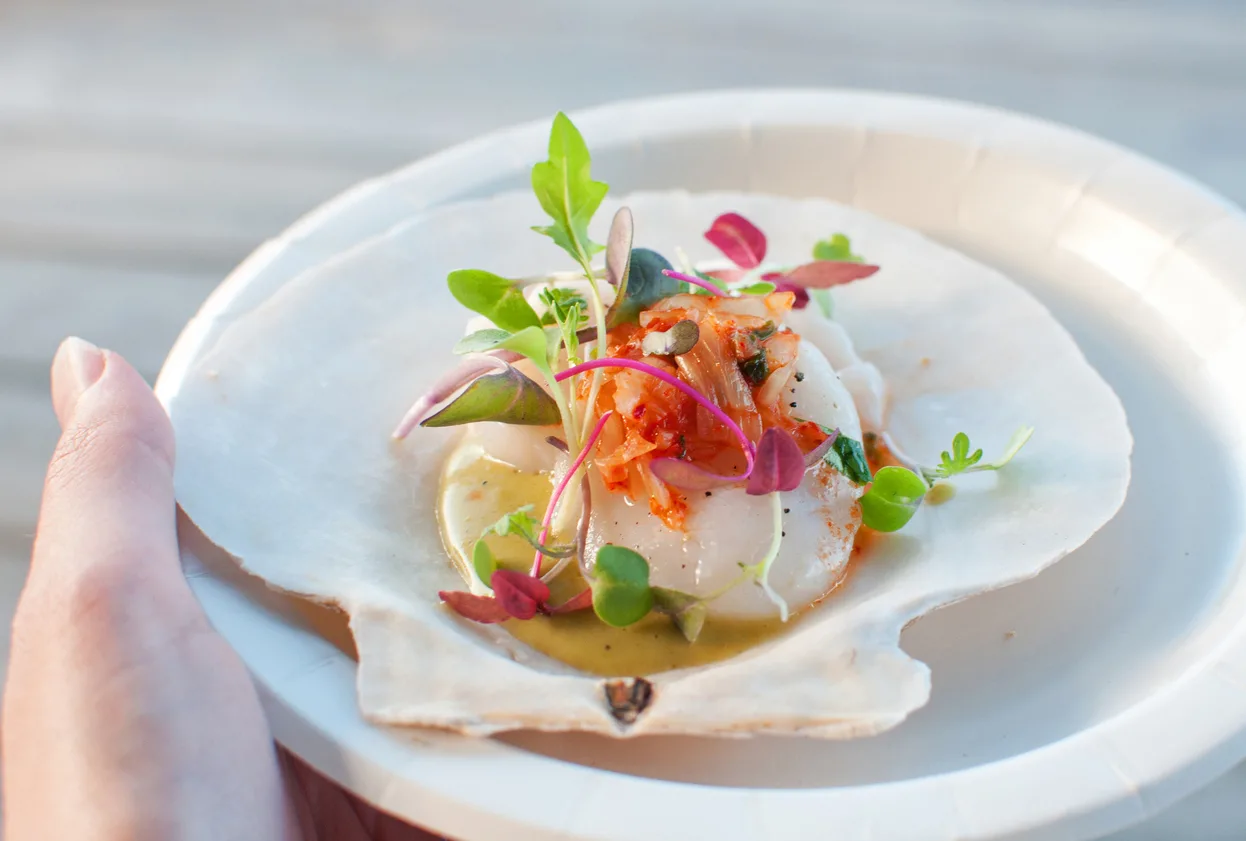
This second recipe uses a fully cooked, ceviche-style preparation. Scallops are sweeter and softer than lingcod, so they need a lighter hand: pink grapefruit brings acidity, fragrance and a faint bitter edge, while cucumber and corn add cool crunch and late-summer sweetness.
The scallops are cooked to temperature, chilled quickly and dressed with lime and grapefruit shortly before serving. The citrus is there for flavour, not to cure raw seafood, and a little chile keeps the fruit and corn from leaning too sweet.
Serves 4 as an appetizer.
Ingredients
- 450 g (1 lb) sea scallops
- ¼ cup freshly squeezed lime juice
- ¼ cup freshly squeezed pink grapefruit juice
- Segments from ½ pink grapefruit, membranes removed and cut into bite-size pieces
- ½ English cucumber, finely diced
- ⅓ cup fresh sweet corn kernels
- ¼ small red onion, sliced very thinly
- ½ to 1 serrano chile or jalapeño, thinly sliced
- ¼ cup loosely packed cilantro leaves
- 1 tablespoon extra-virgin olive oil
- Fine sea salt, to taste
Method
Have a bowl of ice water ready. Bring a saucepan of water to a gentle simmer and cook the scallops until the thickest part reaches 74°C (165°F) on a clean digital thermometer, then transfer them immediately to the ice water.
Once completely chilled, drain and pat them dry so they do not dilute the dressing. Depending on size, cut the scallops into halves, quarters or thick slices, then return them to the refrigerator.
In a cold bowl, combine the lime and grapefruit juices. Add the red onion, chile and a small pinch of salt and let them sit for a few minutes, then add the cucumber and corn and fold in the chilled scallops.
Taste before adding more citrus. Grapefruit can range from fragrant and sweet to surprisingly tart. If the dressing feels soft or sweet, add a little more lime; if it is already bright, leave it alone.
Add the grapefruit pieces, olive oil and cilantro and fold gently. Adjust the salt. The scallops should remain distinct, with the citrus, cucumber, corn and chile working around them rather than over them.
Serve immediately in small chilled bowls with a few tortilla chips or pieces of tostada on the side. It makes a particularly good first course: cool, bright and substantial enough to wake up the appetite without weighing it down.
This version should feel different from the lingcod from the first spoonful. The scallop is soft and sweet, the grapefruit gives it lift, cucumber and corn add small bursts of texture, and the chile comes in behind them. The faint bitterness of grapefruit keeps the sweetness from lingering too long.
Why Grapefruit and Corn Work
Pink grapefruit gives scallops something lime alone cannot: acidity with fragrance, sweetness and a little bitterness. Corn brings a different kind of sweetness with a gentle snap, while serrano or jalapeño keeps both from becoming too soft. Use enough chile to give the bowl an edge, but not so much that it obscures the scallops.
A Brief Note on Citrus and Food Safety
People often say that lime juice “cooks” fish because acid makes the flesh firmer and more opaque. It changes the texture, but it is not the same as cooking seafood with heat.
Health Canada recommends cooking fish to 70°C (158°F) and shellfish, including scallops, to 74°C (165°F). The Canadian Food Inspection Agency also notes that freezing can inactivate parasites in raw fish only under appropriate time-and-temperature conditions. Treat marinating time as a matter of flavour and texture, not proof that raw seafood is safe to eat. If you plan to serve fish without conventional cooking, tell us before you choose it.
Serving Ceviche in Summer
Ceviche earns its place on a summer table through temperature and contrast: cold seafood, fresh citrus, crisp vegetables, chile and something crunchy beside it. The lingcod version works well in a shared bowl with tostadas; the scallops are better in smaller bowls at the beginning of dinner.
Keep the rest of the meal easy. A tomato salad, fresh corn, sliced cucumber or lightly dressed greens are enough. If you are serving both recipes, start with the scallops and bring out the lingcod afterward; the move from sweet grapefruit to sharper lime gives the meal a natural progression.
A Vancouver Ceviche Connection
At UCHU Cevicheria & Raw Bar in Chinatown, Chef Ricardo Valverde draws on his Peruvian heritage and the seafood culture of the Pacific Northwest. UCHU's menu has included both lingcod and scallop ceviches, using combinations quite different from the recipes here. That is the interesting part: the same seafood can support very different ideas when the chef pays attention to its texture and flavour.
That local connection is useful because it shows how much room there is inside the basic idea of ceviche. The technique may be simple, but the seafood can lead a cook toward completely different combinations. A home recipe does not need to imitate a restaurant dish to learn from that way of thinking.
We have explored the same flexibility at 7 Seas with prawns, bay scallops and wild Pacific halibut in our Ceviche Three Ways guide. Changing the seafood changes the bowl; there is no need for one definitive ceviche recipe.
Frequently Asked Questions
Can you make ceviche with lingcod?
Yes. Lingcod's firm white flesh can hold its shape while taking on citrus, onion and chile. If you plan to serve it without conventional cooking, tell your fishmonger exactly how you intend to prepare it.
How long should fish sit in lime juice for ceviche?
There is no single time for every fish or cut. For the ½-inch lingcod pieces in this guide, begin checking after about 10 minutes; 10 to 20 minutes is a useful starting range for a firmer exterior and tender centre. Longer is not automatically better.
Can I use previously frozen fish?
Previously frozen seafood is not automatically lower quality. The Canadian Food Inspection Agency notes that freezing can inactivate parasites in raw fish, but effectiveness depends on the fish, parasite, core temperature and holding time. Ask about the particular product rather than relying on the word “frozen” alone.
What should I serve with ceviche?
Tostadas or sturdy tortilla chips are hard to beat. A simple tomato or cucumber salad, fresh corn or lightly dressed greens can round out the meal without competing with the ceviche.
How much seafood should I buy?
For these recipes, 450 g, or 1 lb, makes about four appetizer portions. If ceviche is the meal, plan more generously. Tell us how many people you are feeding and what else is on the table.
Can ceviche be made ahead?
Prepare the ingredients ahead if it helps, but bring the finished ceviche together close to serving time. It is best when the vegetables are crisp, the herbs are fresh and the seafood has not spent unnecessary time in citrus.
Bring Ceviche to Your Summer Table
Ceviche asks very little of good seafood. With lingcod, lime, cucumber, chile and avocado provide the contrast; with scallops, pink grapefruit, corn and cucumber take the dish somewhere softer and sweeter. In both cases, choosing the seafood first makes the rest of the recipe easier.
If ceviche is on your mind, tell us what you are planning when you visit 7 Seas Fish Market in Kitsilano. Let us know how you intend to prepare it, how many people you are feeding and whether it is the first course or the meal. Then keep the bowls cold, cut the citrus just before you need it and bring everything to the table while it is at its freshest.
Sources and Further Reading
- Health Canada: Safe Internal Cooking Temperatures
- Health Canada: Food Safety for Vulnerable Populations
- Canadian Food Inspection Agency: Fish and Seafood Guidance
- Serious Eats: Ceviche and the Science of Marination
- Rick Bayless: Classic Ceviche
- UCHU Cevicheria & Raw Bar
- 7 Seas Fish Market: Ceviche Three Ways