Vancouver seafood guide for home cooks
Wild Sockeye, Six Ways: How to Cook Sockeye Salmon Without Drying It Out
Published: Last updated:
A good piece of wild sockeye does not ask for much.
Its deep red colour, firm texture and unmistakable salmon flavour can carry a meal with little more than lemon, olive oil and a few fresh herbs. It can be the centre of a summer barbecue, a quick dinner from a hot pan, a family-style oven roast or the starting point for tacos and tomorrow’s lunch.
The part that makes some home cooks hesitate is not flavour. It is timing.
Sockeye can move from tender to dry more quickly than people expect, especially when a fillet varies in thickness. The thin tail end and the thick centre will not cook at the same pace. Neither will two portions cut from different parts of the fish. A recipe can give you a useful starting point, but the salmon in front of you should make the final decision.
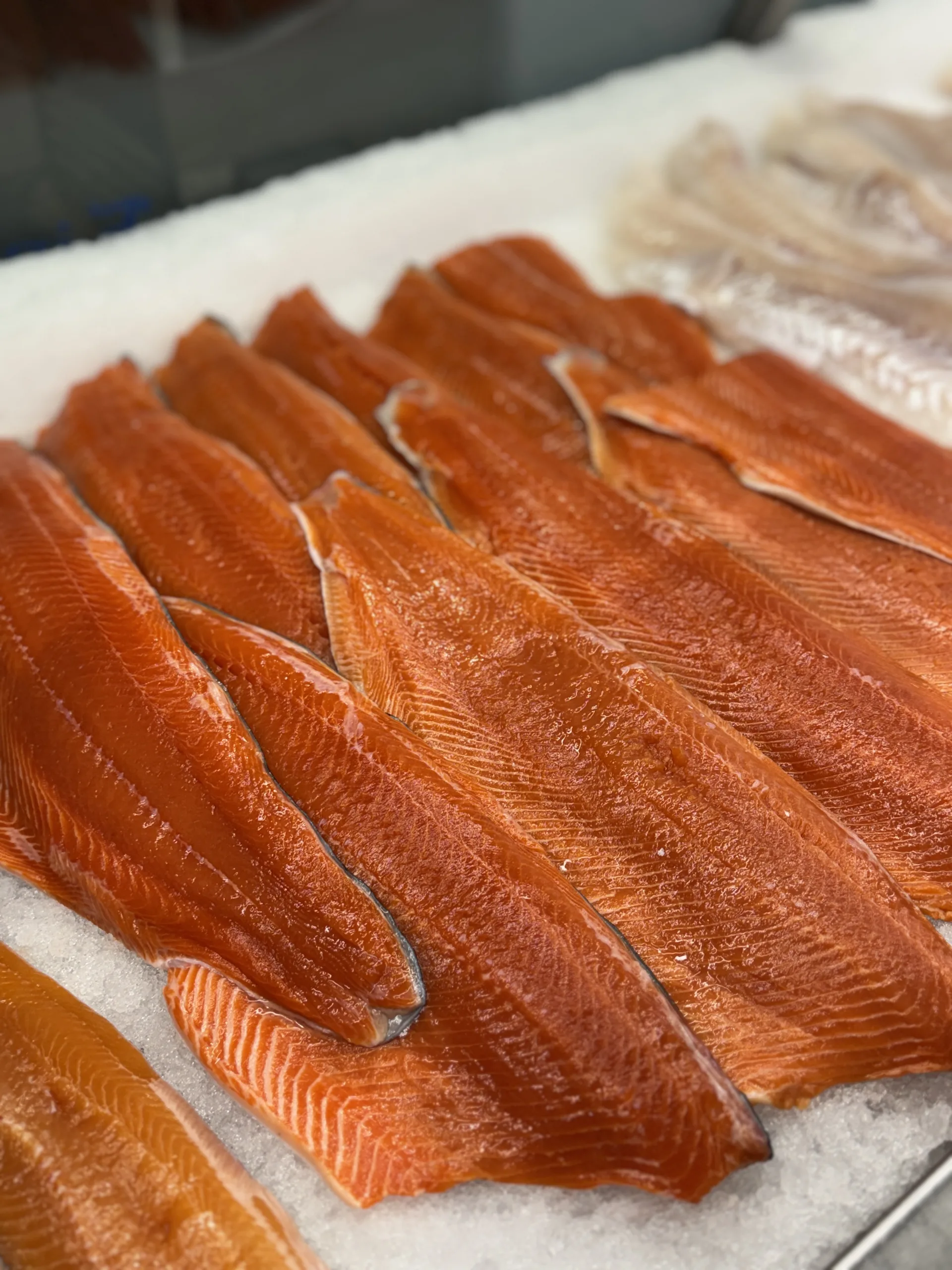
Rather than offer one “best” recipe, this guide shares six dependable ways to cook wild sockeye, each suited to a different kind of meal.
Wild sockeye cooks best when you choose a method suited to the thickness and cut, then check the thickest part instead of relying on cooking time alone.
How Do You Cook Wild Sockeye Without Drying It Out?
Choose a method that suits the thickness and cut, then begin checking the salmon before the suggested cooking time is up. Pat the surface dry, use enough oil to prevent sticking, avoid repeatedly moving the fish and check the thickest part with a clean digital thermometer.
Health Canada recommends cooking fish to an internal temperature of 70°C or 158°F. When cooking several portions, check them separately because they may not finish at the same time.
The most useful rule: use the clock as a guide, not a guarantee.
Why Wild Sockeye Benefits from a Thoughtful Approach
Not every salmon portion behaves the same way in a pan, on a grill or in the oven.
A thick centre-cut piece can handle direct heat differently from a thin tail portion. A large fillet for the table may be easier to manage with steady oven heat or on a cedar plank. A skin-on portion of even thickness can be ideal for pan-searing because the skin protects the flesh and can become crisp.
Before choosing a method, look at the fish itself.
- How thick is the fillet or portion?
- Is the skin attached?
- Are the pieces similar in size?
- Will the salmon be served immediately?
- Do you want a crisp exterior, a light glaze or gentle smoke?
- Are you cooking dinner only or planning a second meal?
Sockeye also rewards restraint. Citrus adds brightness. Dijon mustard adds acidity and depth. Maple brings a little sweetness. Dill, parsley and cilantro add freshness. None of these ingredients needs to dominate the fish.
The goal is balance. Wild sockeye should still taste like salmon when it reaches the table.
Which Sockeye Method Fits Your Meal?
There is no single best way to cook wild sockeye. The best method is the one that fits the cut, the occasion and the amount of attention you want to give it.
A simple summer barbecue
Choose: Classic grilled sockeye
Direct heat, light seasoning and easy outdoor cooking.
A fast weeknight dinner
Choose: Crispy-skin pan-seared sockeye
Quick individual portions with a crisp finish.
An easy first attempt
Choose: Maple-Dijon oven-roasted sockeye
Steady heat and less active attention.
A memorable centrepiece
Choose: Cedar-plank sockeye
Gentle smoke and a shareable presentation.
A casual family meal
Choose: Wild sockeye tacos
Bright, flexible and easy to assemble.
Dinner plus tomorrow’s lunch
Choose: A summer sockeye bowl
One extra portion becomes a second meal.
Six Ways to Cook Wild Sockeye Salmon
Each method below is built around a different Vancouver home-cooking moment, from a quick dinner after work to a summer meal shared outdoors.
1. Summer barbecue
Classic Grilled Wild Sockeye
Grilled sockeye is at its best when the preparation stays simple. Olive oil, lemon, garlic, salt, pepper and fresh herbs support the fish without covering its natural flavour.
Skin-on portions or a larger skin-on fillet work particularly well because the skin creates a protective layer between the flesh and the grill.
Before the salmon goes on
- Pat it dry.
- Brush it lightly with oil.
- Season it simply.
- Clean and oil the grill grates.
- Bring the grill to a steady cooking temperature.
Place skin-on salmon with the skin facing the heat first. Once it is settled, leave it alone long enough to release naturally. Repeated lifting can tear the flesh or leave part of the fillet behind on the grate.
Start checking thin portions early. A large fillet may cook unevenly from one end to the other, so check the thickest area rather than judging the entire piece by the tail.
Serve it with new potatoes, corn, grilled vegetables, a green salad or a light herb sauce.
Fishmonger note
Let us know whether you want separate portions or one fillet for the table. That small decision can make grilling and serving much easier.
2. Weeknight dinner
Crispy-Skin Pan-Seared Sockeye
Pan-seared sockeye is one of the quickest ways to turn an individual portion into a restaurant-style weeknight dinner.
The appeal is contrast: crisp, savoury skin with tender salmon beneath it. The most important preparation step is drying the skin thoroughly. Moisture creates steam, and steam works against crispness.
Before cooking
- Pat the skin dry with a clean paper towel.
- Check for any remaining pin bones.
- Season both sides lightly.
- Preheat the pan.
- Add enough oil to coat the cooking surface.
Lower the salmon into the pan skin-side down, placing it away from you to reduce splashing. Let the skin make full contact with the pan. If the portion starts to curl, press it gently with a spatula for a few moments.
Most of the cooking can happen with the skin side down. Turn the salmon briefly to finish the flesh side, depending on its thickness.
Serve with roasted potatoes, sautéed greens, asparagus, rice, lemon and fresh dill or parsley.
3. Easiest first method
Maple-Dijon Oven-Roasted Sockeye
If you are looking for the easiest introduction to wild sockeye, begin here.
Oven-roasting provides steady heat and requires less active attention than pan-searing. It works for a larger fillet or several portions, especially when the pieces are similar in size.
A light maple-Dijon glaze gives the salmon sweetness, acidity and savoury depth without turning it into a heavily sauced dish.
For a simple glaze
Combine maple syrup, Dijon mustard, minced garlic, lemon juice, a small amount of olive oil, salt and black pepper. Taste it before brushing it over the salmon. You are looking for balance rather than sweetness alone.
Place the salmon skin-side down in a lightly oiled baking dish or on a lined baking sheet. Brush a thin layer of glaze over the flesh.
If you are roasting a full fillet, pay attention to the difference between the thick centre and the narrow tail. Folding the thin end underneath itself can help the fish cook more evenly.
Pair it with roasted root vegetables, green beans, asparagus, rice, quinoa, cabbage slaw or a crisp green salad.
Fishmonger note
For a family meal, ask whether one larger fillet or several evenly sized portions will be easier for the number of people you are serving.
4. Summer centrepiece
Cedar-Plank Wild Sockeye
Cedar-plank sockeye is made for a summer table.
The plank shields the salmon from direct heat, adds a subtle wood aroma and creates a presentation that feels special without requiring an elaborate recipe.
Use only an untreated cedar plank made for cooking. Prepare it according to the manufacturer’s instructions before it goes on the grill.
Pat the salmon dry, brush it lightly with olive oil and season it with salt, pepper and fresh herbs. Add thin lemon slices if you like, then place the salmon skin-side down on the prepared plank.
Cook with the grill lid closed and stay nearby. The plank may darken and smoke, but active flames need to be controlled. Keep water close and never leave the grill unattended.
Serve with grilled asparagus, potatoes, summer vegetables, a cucumber and herb salad, grains or lemon wedges.
Fishmonger note
Tell us the size of your plank and how many people you are serving. We can help you choose a fillet that fits the presentation as well as the appetite at the table.
5. Casual family meal
Wild Sockeye Tacos
Wild sockeye does not have to be saved for a formal dinner.
Tacos make it colourful, relaxed and easy to share. They are also flexible enough for a family meal because everyone can build their own plate.
Grill, pan-sear or oven-roast the salmon, then separate it into generous flakes. Season it simply with lime, salt, pepper, garlic, a small amount of cumin or mild chili and olive oil.
Set out warm corn or flour tortillas with shredded cabbage, sliced radish, avocado, cilantro, green onion, lime and one light sauce.
The key is not to bury the sockeye. A crisp slaw, fresh citrus and a restrained crema or yogurt sauce are usually enough.
Fishmonger note
Tell us how many people you are feeding and what else is on the menu. Tacos may call for a different amount per person than a plated salmon entrée.
6. Cook once, eat twice
Summer Wild Sockeye Bowl
A summer sockeye bowl is a practical way to cook once and eat well twice.
Prepare an extra portion with dinner, then combine it with grains, vegetables and a bright dressing for lunch the next day. The salmon can be served warm or chilled, provided it has been stored safely.
Start with rice, quinoa or another grain. Add cucumber, leafy greens, shredded cabbage, avocado, fresh herbs and lemon or lime. Finish with a light citrus or mustard dressing.
Use large flakes rather than breaking the salmon into tiny pieces. The bowl should still feel centred on the fish.
This method works with grilled, roasted or pan-seared sockeye. It is also a good reason to plan the second meal before you shop instead of hoping there will be leftovers.
Health Canada advises keeping the refrigerator at 4°C or lower and lists cooked fish leftovers at three to four days when refrigerated properly.
Fishmonger note
If you want enough for dinner and lunch, tell us before the fish is portioned. We can help you plan the quantity rather than guess.
Bring Wild Sockeye to Your Table
Wild sockeye can be a quick dinner from a hot pan, a simple family roast, a cedar-plank centrepiece or a relaxed plate of tacos.
The method changes. The starting point does not.
Choose a good piece of salmon, match the cut to the way you want to cook it and pay attention to the fish rather than the clock.
When sockeye is on the fresh list, the team at 7 Seas Fish Market can help you choose a fillet or portion for your meal. Seafood availability changes, so check the current list or contact the market before travelling specifically for wild sockeye.
Visit 7 Seas Fish Market in Kitsilano
7 Seas Fish Market
2328 West 4th Avenue
Vancouver, BC V6K 1P1
Phone: 604-732-8608
Email: hello@7seas.ca
Check Current Ordering Options
The current selection may vary between the shop, Toast and Uber Eats. Check the live menus before ordering specifically for sockeye.
Frequently Asked Questions About Wild Sockeye Salmon
1. What makes sockeye different from other salmon?
Sockeye is known for its rich red colour, firm texture and pronounced salmon flavour. Fisheries and Oceans Canada identifies sockeye as Oncorhynchus nerka and notes that its colour and oil content may be influenced by a diet that includes shrimp and other crustaceans.
2. Why is sockeye salmon so red?
The colour develops through the fish’s natural diet, which includes foods containing pigments that contribute to the deep red-orange flesh. Colour alone should not be used to confirm a fish’s species, origin or production method. Accurate product identification matters.
3. How do you keep wild sockeye from drying out?
Choose a method suited to the thickness and cut. Pat the surface dry, avoid repeatedly moving the fish and begin checking it before the suggested cooking time is finished. A digital thermometer is more dependable than time alone.
4. What is the easiest way to cook sockeye salmon?
Oven-roasting is a good starting point. It provides steady heat, works with a larger fillet or evenly sized portions and requires less active attention than pan-searing.
5. Is skin-on sockeye better for grilling and pan-searing?
Skin-on portions are particularly useful for both methods. The skin protects the flesh from direct heat and can become crisp in a properly heated pan.
6. Can wild sockeye be cooked on a cedar plank?
Yes. Use an untreated plank intended for cooking, prepare it according to the manufacturer’s instructions and supervise the grill throughout the process.
7. What seasonings work well with wild sockeye?
Lemon, lime, Dijon mustard, maple syrup, garlic, dill, parsley, cilantro, black pepper, mild chili and olive oil all work well. Sockeye has a distinctive flavour, so a few carefully chosen ingredients are usually better than a heavy marinade.
8. What internal temperature should sockeye reach?
Health Canada recommends cooking fish to an internal temperature of 70°C or 158°F. Check the thickest part with a clean digital thermometer. If you are cooking several portions, test them separately.
9. How much sockeye should I buy per person?
It depends on whether salmon is the main course, how it will be served and how many side dishes are planned. Tell the 7 Seas team how many people you are feeding and whether you want extra salmon for another meal. We can help you choose a suitable quantity based on the cut and current availability.
10. Where can I buy wild sockeye salmon in Vancouver?
Check the current fresh list at 7 Seas Fish Market, call the shop or visit us at 2328 West 4th Avenue in Kitsilano. Because seafood availability changes, confirm the current selection before travelling specifically for sockeye.
Explore More from 7 Seas Fish Market
Wild BC Salmon in Vancouver
A broader guide to wild BC salmon, seasonal buying considerations, cooking ideas and the place of salmon in Vancouver food culture.
Caviar in Vancouver
A practical guide to choosing, serving and ordering caviar for a special meal, seafood course or gathering.
Contact 7 Seas Fish Market
Store address, telephone number, hours and directions, plus a direct way to ask about current sockeye availability and suitable cuts.
7 Seas Fish Market Homepage and Fresh List
The current fresh list, store information, pickup and delivery links, newsletter signup and latest seafood guides.
Canadian Salmon and Food-Safety Resources
Fisheries and Oceans Canada: Information About Pacific Salmon
Official background on sockeye and other Pacific salmon species, including identification, life cycles, distribution and fisheries context.
https://www.pac.dfo-mpo.gc.ca/fm-gp/salmon-saumon/facts-infos-eng.html
Fisheries and Oceans Canada: Pacific Salmon Fisheries
Broader federal information about Pacific salmon management, conservation, stock assessment and fisheries.
https://www.pac.dfo-mpo.gc.ca/fm-gp/salmon-saumon/index-eng.html
Health Canada: Safe Internal Cooking Temperatures
Official cooking-temperature guidance and instructions for using and cleaning a food thermometer.
Health Canada: Safe Food Storage
Guidance on refrigeration, freezing, safe storage and recommended storage times for fresh and cooked fish.
https://www.canada.ca/en/health-canada/services/general-food-safety-tips/safe-food-storage.html
Canadian Food Inspection Agency: Labelling Requirements for Fish and Fish Products
Canadian requirements and guidance covering common names, country of origin, previously frozen products and voluntary production-method claims.
https://inspection.canada.ca/en/food-labels/labelling/industry/fish
Canadian Food Inspection Agency: What to Look for When Buying Fish and Seafood
Consumer guidance on seafood identity, traceability and truthful claims such as species, wild or farmed production, catch location and sustainability.
https://inspection.canada.ca/en/food-labels/food-fraud/fish-labelling-and-traceability/what-look
About James Heras